


Blog 2: Ideas and selections

Hi, welcome back to my blog! Today's post will mainly consist of the ideas that my group and I have come up with over the past few weeks using Padlet and the ideas we have shortlisted with the help of the feasibility screening. I will also be sharing about the COWS framework we use to weigh each criterion for each idea
Brainstorming
Before creating our chemical product, we had to go through the ideation process, where my lecturer used Padlet as a platform for my group and me to come up with more than 25 ideas related to our UNSDG (Goal 7). During this process, my group and I faced many difficulties. However, we were able to overcome those difficulties through heated discussions, and eventually, we were able to have fun as well.
To start our ideation process, my group and I discussed a product that provides renewable energy which is solar panels. Next, my group began coming up with ideas related to solar panels such as their applications and if there are any ways to improve its efficiency in absorbing and converting solar energy to electrical energy. Finally, my group would share our ideas and discuss them, and after those discussions, there would also sometimes be new ideas born from them. Through this process, my group was limited by ground rules that we set such as the feasibility of our ideas in Singapore's context and that the ideas we come up with should revolve around solar panels. However, after wrecking our brains and coming up with ideas based on these ground rules, we realized that we should not limit ourselves to only solar panels as it is not the only source of renewable energy. Hence, my group came up with ideas such as radioactive converters that convert electromagnetic waves and sounds to energy and electrolysers that uses renewable energy for the electrolysis of water to produce green hydrogen.
Personally, this experience in the ideation process was very interesting as we learned more about existing chemical products like electrolysis set-ups and solar panels. Not only that, the heated discussions that my group and I had helped me learn that arguments can sometimes be a good thing.
Shortlisted ideas from Padlet
Out of the 25+ ideas that my group has come up with, we decided to go with 5 main ones. These 5 are, adding bumps on a solar panel, adding coolants to solar panels, solar panels using the phototropism concept, radioactive converters that convert electromagnetic waves and sounds to energy, and electrolysers that use renewable energy for the electrolysis of water to produce green hydrogen.


Ideas that pass Feasibility screening
Through the feasibility screening, my group and I have chosen to add coolants to solar panels, adding bumps on a solar panel and solar panel using the phototropism concept based on considerations like Time, Budget, and Technical feasibility. This screening process was relatively easy as my group and I had already researched the components related to the ideas that we had come up with. Hence, we did not take much time going through the tick boxes for each idea we had.
Is this Screening Comprehensive?
My group and I believe that this feasibility screening is comprehensive as it covers most questions needed for us to take action on the idea. For example, questions like "Is the project feasible within the limits of current technology?" and "Does it need any computer software and fabrication equipment?" help us imagine how to start on our idea and make our idea more realistic. Hence, we believe that the screening was comprehensive.
Engineering Decision Matrix (COWS)
After using this tool, we believe that it was easy to come up with the criteria for evaluating our 3 shortlisted ideas. However, the main problem was deciding how to assign the weightage for each criteria as all the criteria listed seemed very important. Not only that, there were times when different views from each group member were valid and reasonable. Hence, it was difficult to determine which criteria weighed more than the other. To tackle this, we decided on a condition which was finding the main cause. With the help of this condition, my group was able to make agree on the weightage of each criteria and minimize any disagreements.
My recent experiences
To wrap things up, the recent lessons of the ICPD module have allowed me to experience taking apart a coffee maker and creating 3D models for printing using Fusion360.
In my recent practical session, I got to take apart a coffee maker and find out more about its mechanics such as the use of a bimetallic strip to stop the brewing process and the use of the air-lift-pump concept when water boils at the heating element. In this practical, we also learned that the coffee maker is like a mini chemical plant set-up that involves instruments and equipment like check valves and heating elements.


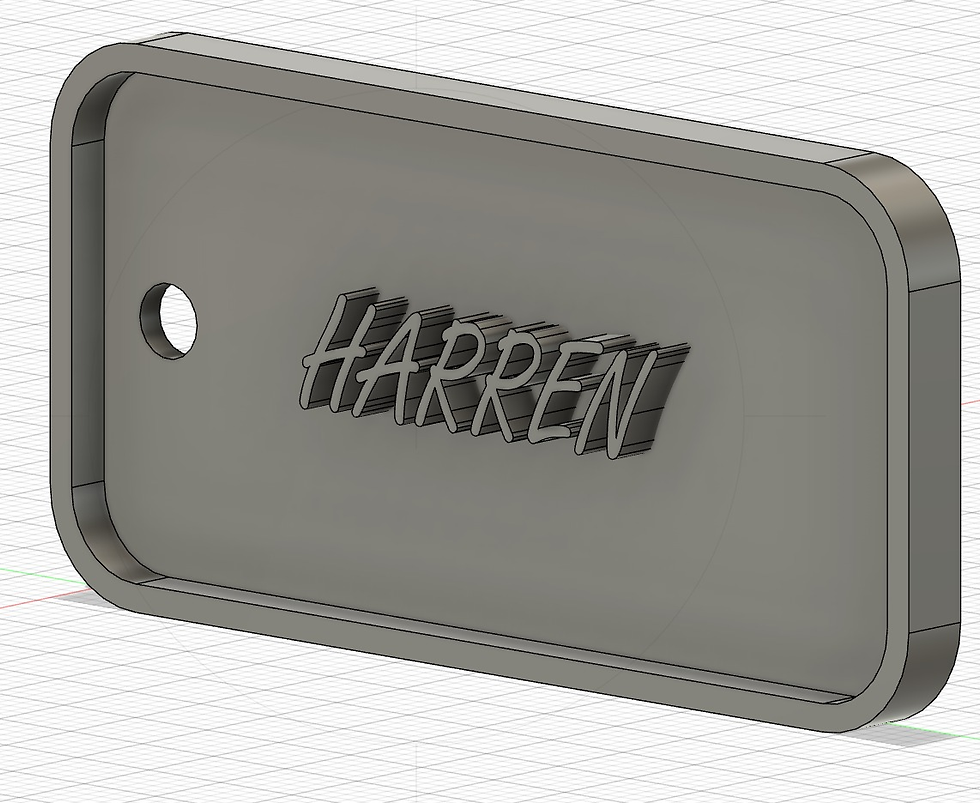
In lessons 5 and 6 of this module, we were also introduced to 3D modeling using Fusion360 where we designed items such as tags and photo frames. Personally, this portion of our ICPD module was very interesting and enriching because I got first-hand experience in brewing coffee and reverse-engineering a coffee maker which is a common household item. Not only that, I got to experience constructing a 3D model for the very first time in my life. Hence, I believe that this experience was refreshing compared to different modules where we only studied written content.

That is all for my blog for today! I hope you look forward to the next one! Thanks for tuning in!


Comments